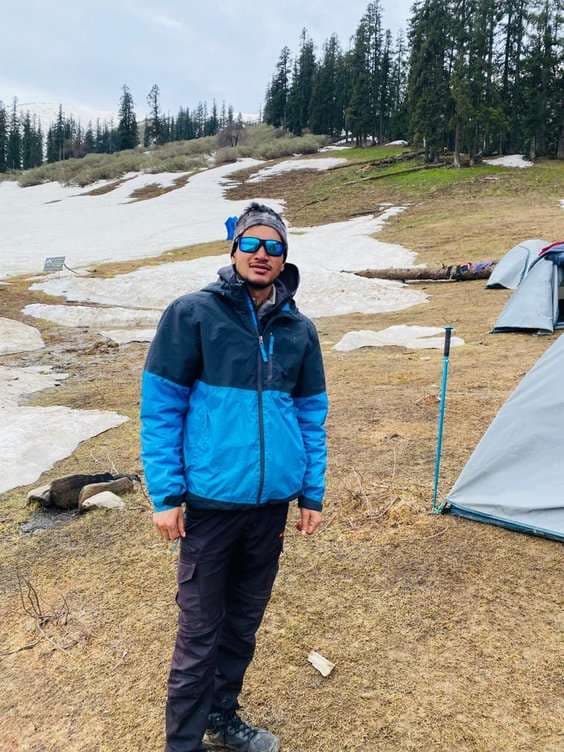
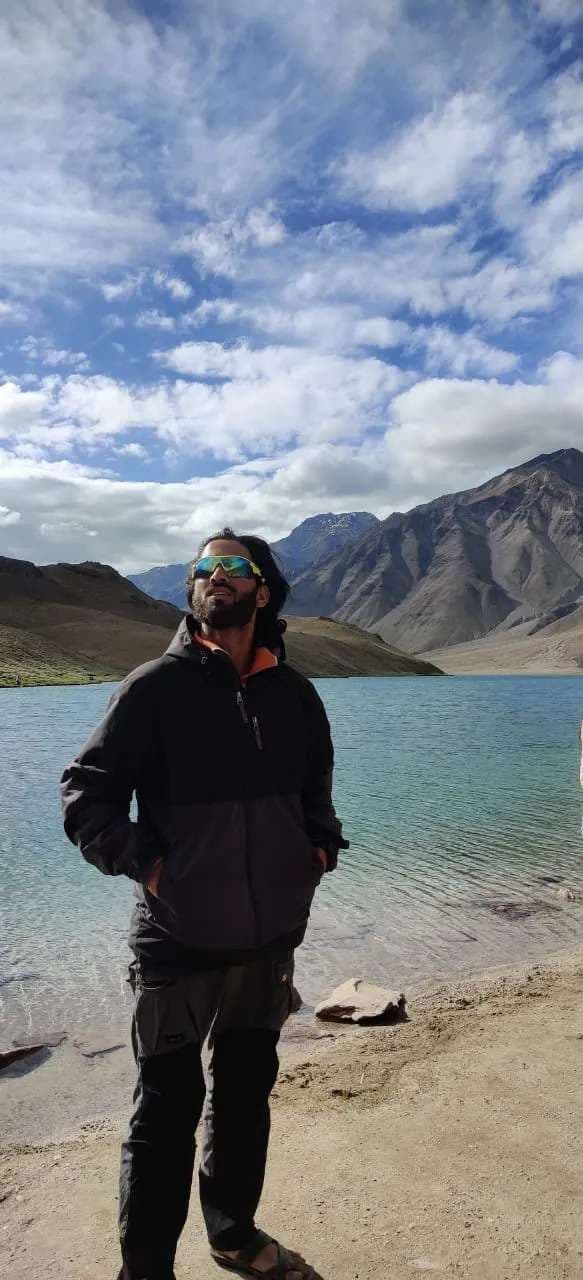
Buran Ghati Trek — Himachal's Most Dramatic Pass Crossing in the Pabbar Valley
There are easy treks in the Himalayas. There are beautiful treks. And then there is the Buran Ghati Trek — a six-day journey through Himachal Pradesh that does something almost no other trek in India dares to do. It takes you up to 15,000 feet, drops you off the edge of a near-vertical ice wall, and rappels you down 400 feet of frozen mountain face before depositing you, exhausted and grinning, into the apple orchards of Barua village on the other side.
Most trekkers come here for the snow wall. They leave talking about the seven sacred lakes of Chandranahan, the wide green sweep of Dayara meadow, and the old wooden houses of Janglik village that have stood for centuries without a single nail holding them together. This is not a trek you forget. This is the one that turns a casual hiker into a mountain person.
At Trekyaari, we have been guiding this pass crossing for years, running small batches of 12 to 15 trekkers at a time so nobody waits in line at the snow wall and everyone gets the attention they deserve on summit day. If you have already done Hampta or Kedarkantha and you are looking for what comes next — this is it. The 2026 batches are already filling up.
Reserve Your 2026 Slot Today — Call 1800 889 1805 or WhatsApp +91 9310545460
Buran Ghati Trek — Quick Facts You Need to Know
Before we get into the long version, here is everything important about this trek in one place. These numbers come from our GPS-tracked field data and reflect what you will actually experience on the trail, not marketing-brochure figures.
Detail | Information |
Trek Name | Buran Ghati Trek (also known as Buran Pass Trek, Buran Ghati Pass Trek, Burando Pass) |
Location | Pabbar Valley to Baspa Valley, Himachal Pradesh, India |
Buran Ghati Altitude / Height | 15,000 ft (4,572 m) — at the Buran Pass summit |
Base Camp | Janglik village (9,200 ft / 2,804 m) |
Buran Ghati Trek Distance | Approx 34 km on foot (excluding the Shimla–Janglik drive) |
Duration | 6 days on the trail (8 days total Shimla to Shimla) |
Difficulty Level | Moderate to Difficult |
Buran Ghati Trek Best Time | May to mid-June (snow season) | September to mid-October (clear season) |
Buran Ghati Temperature | Daytime: 8°C to 18°C | Nighttime: -8°C to 5°C (varies with season) |
Trail Type | Crossover trek — start at Janglik, end at Barua (different valleys) |
Pickup / Drop | Shimla (Old Bus Stand, 7:00 AM on Day 1) |
Buran Ghati Trek Cost | Industry range ₹14,000 – ₹18,000 per person | Trekyaari offers seasonal discounts + free gear |
Group Size | 12 to 15 trekkers (1:6 trek leader ratio on summit day) |
Last ATM | Rohru (approx 40 km before Janglik) |
Mobile Network | BSNL + Jio till Janglik | No coverage beyond Day 2 |
Why the Buran Ghati Trek Sits in a League of Its Own
Ask anyone who has trekked seriously in the Indian Himalayas to name the most complete trek they have done, and this one comes up almost every time. The reason is simple — it does not pick one thing and do it well. It picks five things and does them all better than treks that specialize in just one.
On Day 1, you are walking through deodar forest that smells like rain. By Day 2, you are sitting in the middle of Dayara Thatch, a meadow so wide and green that you genuinely lose your sense of scale. Day 4 takes you to Chandranahan Lake, where seven glacial pools sit in stunned silence below a thundering waterfall. Day 6 puts you on top of the pass at 15,000 feet, staring at the Kinnaur Kailash range stretched out like a postcard you cannot believe is real. And then comes the descent — the part everyone talks about, but no one fully prepares you for.
The Buran Ghati Snow Wall — The Trek's Real Signature
This is what makes this trek genuinely different from any other Himalayan pass crossing. After you reach the top of the pass, the trail does not switchback gently down the Kinnaur side. It just drops. A near-vertical 400-foot wall of snow and ice waits for you on the other side. In the snow season (May and June), our technical team fixes ropes from the top, and one by one, you rappel down a frozen face of ice. It is a proper mountaineering technique used on a trail that does not demand mountaineering experience.
After the rope section, the snow slope eases out and you get a series of long, fun glissades — five or six big snow slides that will have you laughing like a child. By the time you stop sliding, you have dropped almost 3,000 feet in altitude in a single afternoon. It is one of the most intense, joyful, and memorable experiences in Himalayan trekking. Nothing else feels quite like it.
Chandranahan Lake — Seven Sacred Glacial Pools
On Day 4, instead of pushing toward the pass, you take a side trail up from Litham campsite to Chandranahan Lake. People keep calling it a lake — actually it is a cluster of seven small glacial pools fed by a massive waterfall that crashes down from the cliffs above. Locals in Janglik consider these waters sacred. Their kuldev (clan deity), Shikru, is carried up here once a year for ritual bathing. You can feel why. The silence at 13,900 feet above sea level is the kind that makes most people stop talking entirely.
This day is also a smart acclimatization day. By climbing to 13,900 feet and descending back to sleep at 11,800 feet at Litham, your body builds altitude tolerance the way the Himalayan body is meant to — slowly, with rest, with respect.
Dayara Thatch — One of India's Most Photographed Meadows
If you have seen one image from this trail, it is probably the wide green sweep of Dayara Thatch. The meadow appears on Day 2, right when the deodar and oak forest finally opens up. Horses graze loose across the grass. Shepherds' huts dot the edges. Wildflowers grow in colour-coded patches. The Pabbar River cuts through one side. Sit down on a flat rock, and you can spend three hours doing absolutely nothing without realizing the time has passed. Veteran Himalayan trekkers consistently rank Dayara among the top three meadows in India.
Janglik and Barua — Two Villages from a Different Century
The trail starts at Janglik and ends at Barua, and both villages are worth a full day of exploration in themselves. They are built in the ancient Kath-Kuni style — alternating layers of deodar wood and locally quarried stone, interlocked at the corners with no mortar or nails. The technique is over 800 years old. The houses have survived earthquakes that flattened modern concrete in nearby Shimla. UNESCO has begun documenting Kath-Kuni architecture as a vanishing Himalayan heritage. Walking through Janglik feels like walking into a village that decided modernity could wait.
Barua, on the other side of the pass, is a completely different vibe. It sits in the Baspa Valley near Sangla, surrounded by apple, peach, and apricot orchards. The houses are warmer, the people are softer, the food has more Tibetan influence. After six days of high-altitude effort, walking into Barua feels like the trek is rewarding you for everything it just put you through.
A True Crossover Trek — Two Valleys, Two Worlds
Most treks loop back to where they started. This one does not. You start in the Pabbar Valley, near the Shimla side of Himachal. You end in the Baspa Valley, near the Kinnaur side. Two completely different valleys. Two ecosystems. Two cultures. Connected by an ancient sheepherder's route over a 15,000 ft pass. No retracing, no doubling back — just forward, day by day, into a new world. This is what makes the Buran Ghati Pass Trek a true crossover route, and one of the only ones in India where the trail itself is a story arc.
Buran Ghati Trek Best Time — Snow Season vs Autumn Season
This is one of the most important decisions you will make about the Buran Ghati Trek best time question. The trail runs in two distinct windows, and they offer two genuinely different experiences. Pick wrong and you will either miss the snow wall or find the pass closed. Pick right and you get the trek exactly the way you imagined it.
Buran Ghati Trek in May and June — The Snow Wall Season
This is the iconic version of the trail. The pass is still buried under firm, deep snow. The 400 ft descent on the Kinnaur side is a frozen wall of ice, and you go down it on ropes. The Dayara meadow is just starting to turn green. Chandranahan Lake is partially frozen. Dhunda campsite is dusted white. If your goal is the famous snow wall rappelling experience — and let's be honest, most trekkers who specifically choose this pass over others come for exactly this — then May and the first half of June are the only months that deliver it. Daytime temperatures: 10°C to 18°C. Nighttime: -3°C to -7°C at the higher camps.
Buran Ghati Trek in September and October — The Clear-View Season
A completely different trek, in the best way. The snow is mostly gone from the pass by mid-September. The descent is on rock and scree, not ice. There is no rappelling, but the trek feels slightly less demanding and the visibility is unbeatable. The skies are pin-sharp clear. The Kinnaur Kailash range looks closer than it has any right to look. The meadows turn golden. The trees in the Barua orchards are heavy with ripe apples. If you are coming for the landscape rather than the adrenaline, this is your window. Daytime temperatures: 10°C to 16°C. Nighttime: -5°C to -8°C at the higher camps, sometimes colder in late October.
Why You Cannot Trek Buran Ghati in Monsoon (July to August)
The Pabbar Valley sits right in the path of the southwest monsoon. From late June through August, the trail is hammered by heavy rain. The approach road from Shimla to Janglik suffers landslides almost weekly. The forest sections are full of leeches. The snow bridges over the streams become dangerously unstable. Visibility on the pass crossing drops to near zero. Trekyaari does not operate this route during monsoon, and we strongly recommend you do not trek with any operator who claims they can run it safely in July or August. The risk is genuinely not worth it.
Why Winter (November to April) Is Off-Limits
Once November arrives, the pass is buried under fresh snow that does not consolidate the way summer snow does. The approach road from Shimla to Janglik gets cut off repeatedly by snowfall. Higher campsites become unreachable without expedition-grade equipment, mountaineering teams, and weather windows that almost never align. The trek reopens in early May once the village teams in Janglik confirm the route is clear and the snow has consolidated.
Month | Day Temp | Night Temp | Snow on Pass | Best For |
May | 8°C to 14°C | -5°C to 0°C | Heavy | Snow wall rappel |
June | 12°C to 18°C | -2°C to 4°C | Moderate | Snow + wildflowers |
Jul - Aug | Closed | Closed | Monsoon | Not safe |
September | 12°C to 16°C | -2°C to 4°C | Minimal | Clear long views |
October | 8°C to 14°C | -8°C to -2°C | Light | Autumn + astro |
Buran Ghati Trek Difficulty — Honest, Real-Talk Assessment
Let us be straight with you, because too many trek operators are not. This trail is rated Moderate to Difficult, and we mean both words. Moderate, because for most of the six days, you are walking through manageable terrain at altitudes that fit trekkers feel comfortable in. Difficult, because the summit day — Day 6 — is genuinely one of the harder days you can put your body through in the Indian Himalayas. A 2 AM start. Nine to ten hours of continuous walking. Almost no water sources for the first seven hours. A steep climb on snow to the top. A technical descent on the other side. This day separates the prepared from the unprepared, every single batch.
Who Should Attempt the Buran Ghati Trek
Ideally, you should have at least one high-altitude Himalayan trek above 12,000 ft already behind you. Hampta Pass, Kedarkantha in winter, Sar Pass, Bhrigu Lake, Brahmatal — any of these works as a baseline. This is not a first trek. Fit beginners with serious training and excellent baseline fitness can attempt it, but they will find Day 6 harder than they expected. If you have never been above 12,000 ft, do one of the entry-level treks first. You will enjoy the experience far more when your body already knows what altitude feels like.
Fitness Standards We Honestly Need
• Running: 5 km in 32 to 35 minutes, comfortably, three to four times a week. This is the minimum benchmark.
• Endurance hike: A continuous 8 km walk with a 6 to 8 kg backpack without major fatigue. Practice on inclines if possible.
• Strength: 3 sets of 20 squats. 3 sets of 20 lunges. 60 to 90 second planks. 3 sets of 25 calf raises. The descent will punish weak legs more than the climb will.
• Downhill conditioning: Often skipped, never optional. Include downhill running or stair descents. Your knees take a serious beating on the descent to Barua, and untrained knees will struggle.
• Start training: At least 8 weeks before your trek date. 12 weeks is better. There are no shortcuts.
What Makes Day 6 So Hard
Three things. First, altitude — you wake up at 13,400 ft and climb to 15,000 ft within four hours, which is steep on the body's oxygen demand. Second, duration — you are walking continuously for 9 to 10 hours with limited water, in cold air, often in snow. Third, the descent — whether on rope through the ice wall or on scree in autumn, the descent demands balance, calm decision-making, and the ability to follow your trek leader's instructions without panicking. Mental preparation matters as much as physical preparation on this day. We say this honestly in every pre-trek briefing.
Do You Need Rappelling Experience?
No. This is the single most common worry trekkers have, and we want to clear it up properly. You do not need any prior rappelling or mountaineering experience. Our certified technical team fixes the ropes from the top of the pass before any trekker arrives at the wall. You will be harnessed, double-checked, and belayed by the team as you go down. Your only job is to lean back, walk down the wall with your feet, and trust the system. The descent is fully managed. People who have never touched a rope in their life have done it without issue. What you do need is the willingness to step off the edge — and the calm to follow instructions while doing it.
Not Sure if You're Ready? Get a Free Fitness Consultation From a Trekyaari Trek Advisor
How to Reach the Buran Ghati Trek Base Camp
The trail starts from Janglik village in the upper Pabbar Valley, around 160 km from Shimla. Shimla is your assembly point, and the easiest way to reach it depends entirely on which city you are coming from. Here is the cleanest, most reliable route from each major hub.
From Delhi
By road is the most popular option. HRTC and private Volvo buses run multiple daily services from ISBT Kashmere Gate to Shimla, taking 9 to 10 hours overnight. Board around 9 PM, sleep through the journey, and arrive in Shimla by 6 AM the next morning — fresh for the Day 1 pickup. By train, take the New Delhi to Kalka Shatabdi (4 hours), then the heritage Kalka–Shimla toy train (5.5 hours) or a 3-hour taxi from Kalka to Shimla. By air, the nearest reliable airport is Chandigarh (IXC) — fly into Chandigarh, then a 4-hour Volvo to Shimla.
From Mumbai, Bangalore, Kolkata, Hyderabad
Fly into Delhi (the most reliable connection for trekkers) and then take the overnight Volvo or train. Direct flights to Shimla's Jubbarhatti airport exist but are unreliable and weather-dependent. We do not recommend booking Shimla as your final flight destination if you have a trek to catch — too many trekkers have missed Day 1 because of cancelled flights.
Shimla Pickup Details
Our Trekyaari team picks up confirmed trekkers from the Shimla Old Bus Stand at 7:00 AM sharp on Day 1. The drive to Janglik is approximately 160 km and takes 8 to 9 hours, with stops for breakfast and lunch. Please arrive in Shimla by Day 0 (the previous evening). We strongly advise against booking last-minute Day 1 morning arrivals — if your bus is delayed, you will miss the pickup, and the rest of the batch cannot wait.
Buran Ghati Trek Cost — What You're Actually Paying For
The Buran Ghati Trek cost in India typically falls between ₹14,000 and ₹18,000 per person for a Shimla-to-Shimla package across most reputable operators. The difference between operators is rarely the price itself — it is what gets included in that price, and more importantly, what gets cut to keep the price low. Here is what a real, well-run package should include.
What's Included in the Trekyaari Buran Ghati Trek Package
• Accommodation: 1 night homestay at Janglik + 5 nights twin-sharing tents at all high-altitude camps
• All meals: From Day 1 dinner to Day 7 breakfast — three full meals plus tea/snacks daily, vegetarian and freshly cooked
• Trek leadership: Certified trek leader (NIM/JIM/ABVIMAS qualified) plus local guide, cook, helpers
• Transport: Shimla to Janglik on Day 1 and Barua to Shimla on Day 7, both in dedicated vehicles
• Technical gear: Ropes, harnesses, carabiners, ice axes for the snow wall descent — all gear provided
• Camping equipment: High-altitude tents, sleeping bags rated to -10°C, sleeping mats, dining tent, kitchen tent, toilet tent
• Safety equipment: Portable oxygen cylinders, pulse oximeters, high-altitude medical kit, hyperbaric (Gamow) bag on summit day
• Permits: All forest permits and entry fees included
What's Not Included
• Travel to and from Shimla (book your own bus, train, or flight)
• Personal trekking gear (shoes, jacket, backpack) — see packing list below
• Personal expenses, tips to support staff, mule charges for backpack offloading
• Travel insurance (highly recommended)
Free Bonuses Worth ₹4,500+ With Every Trekyaari Booking
Every booking with Trekyaari includes a free Hikerce branded trekking jacket, a free Trekyaari travel card with partner discounts, a ₹500 voucher for your next trek, 50% off on the Hikerce 75 L rucksack, 10% off Volvo bus bookings, and 15% off Moustache Hotels properties in the region. These are real, redeemable benefits — not vague footnote claims. They are also part of the reason our repeat-trekker rate is one of the highest in the industry.
Lock In 2026 Pricing + Free Jacket + Travel Card — Reserve Your Slot Now
Why Book the Buran Ghati Trek with Trekyaari
There are several established trek operators running this route. We respect every single one of them, and we are not going to pretend we are the only choice. But there are specific, structural reasons why our trekkers — especially the ones who have already done one or two harder treks elsewhere — keep coming back to us for crossover treks like this. We are not the cheapest. We are not the loudest. We are trying to be the safest and the most enjoyable, and these are the things we do differently.
Small Batches — 12 to 15 Trekkers, Not 25
Big batches are the single biggest hidden risk on a technical pass crossing. The bigger the group, the longer the wait at the snow wall, the colder you get standing in queue, the slower the descent, and the more pressure on the trek leader to rush the slowest trekker. We cap our batches at 12 to 15 trekkers per departure, giving us a 1:6 trek-leader-to-trekker ratio on summit day. The industry standard is 1:8 to 1:10. The difference is real, and you feel it on the trail.
Trek Leaders Who Actually Live in the Region
Every Trekyaari trek leader on this route holds at least a Basic Mountaineering Course certificate from a recognized Indian institution — NIM in Uttarkashi, ABVIMAS in Manali, or JIM in Pahalgam. More importantly, several of our lead guides are from the Pabbar Valley region itself. They know which campsite drains badly in unexpected rain, which forest stretch becomes slippery in the afternoon sun, and which families in Janglik to call if we need a porter at short notice. That kind of local knowledge is something you cannot get from a training certificate.
A Real Acclimatization Day, Not a Marketing Day
Day 4 — the Chandranahan Lake hike — is built specifically to let your body adjust between the 11,800 ft of Litham and the 15,000 ft of the Buran Pass. Some operators quietly skip this day to compress the trek into five days and save on costs. We do not, and we will not. The medical literature on high-altitude pulmonary edema (HAPE) and acute mountain sickness (AMS) is unambiguous: a properly placed acclimatization day reduces the risk of AMS by more than 60%. Your safety is not where we compete on price.
Full Safety Stack on the Trail
• Pulse oximeter readings taken twice daily (morning and evening) for every trekker
• Portable oxygen cylinders carried by both the lead trek leader and the sweeper
• Hyperbaric (Gamow) bag carried up to the summit camp
• AMS-specific medical kit including Diamox, Dexamethasone, and Nifedipine
• Fixed rope and rappelling gear set up by certified technical staff before any trekker arrives at the wall
• Daily satellite communication check-ins with Trekyaari HQ in New Delhi
• Identified emergency exit points and the nearest hospital location (Rohru, 50 km from Janglik)
Certified, Friendly Trek Leaders You Can Actually Talk To
Our team is led by trek leaders like Gagan Thakur (AMC Jawahar Lal Nehru certified), Narendra Singh Negi (BMC NIM), Shubham Kotnala (BMC NIM), and Raghuvir Bisht (BMC, AMC) — names you will see on our team page with their actual mountaineering certifications. They are the people you will be eating dinner with, getting AMS briefings from, and trusting your safety to. They are good at what they do, and more importantly, they care.
Speak to a Trek Advisor — Toll Free 1800 889 1805 | WhatsApp +91 9310545460
Buran Ghati Trek Packing List — Field-Tested Essentials
Packing for this trail is meaningfully different from packing for a regular Himalayan trek, because the snow wall descent guarantees your gloves, gaiters, and trekking pants will get wet. Synthetic and quick-dry beats cotton every single time. This is the actual list our trek leaders share with confirmed trekkers in the pre-departure handbook.
Non-Negotiable Essentials
• Trekking shoes: High-ankle, waterproof, well broken-in. Quechua MH500 or MH100 work. Never start a trek in brand-new shoes — guaranteed blister disaster.
• Backpack: 60 to 70 litre with rain cover, padded hip belt, and load lifters
• Daypack: 15 to 20 litre for the Chandranahan Lake acclimatization hike and summit day
• Down jacket: Rated to -10°C minimum. A regular fleece will not cut it on summit night.
• Waterproof shell jacket and pants: Hardshell, not water-resistant. Critical for the snow descent.
• Trekking poles: Two poles, not one. Non-negotiable for the descent into Barua.
• Headlamp: With spare batteries — the 2 AM summit start is in pitch dark
• Gaiters: Keep snow out of your boots on the descent. Easy to underestimate, painful to skip.
Clothing Layers
• 5 to 6 pairs of trekking socks (synthetic + 2 thick wool pairs for high camps)
• 2 pairs of thermal base layers (top and bottom, merino wool or synthetic — never cotton)
• 3 quick-dry t-shirts
• 1 fleece + 1 mid-layer puffy
• 2 pairs of waterproof gloves (one inner, one outer)
• Warm beanie + buff or balaclava + sun cap
Personal and Medical
• UV-rated sunglasses (Category 3 or 4) — snow blindness is a real risk
• SPF 50+ sunscreen and SPF lip balm
• Personal medication + Diamox (consult your doctor 2 weeks before)
• 1-litre insulated water bottle + 1-litre regular bottle (drink 3 litres minimum daily)
• Energy bars, dry fruits, electrolyte sachets (high-altitude appetite drops — you need easy calories)
• Original government ID + 2 photocopies
• Power bank (10,000 mAh minimum — no charging beyond Janglik)
• Quick-dry towel + toiletries + toilet paper + hand sanitizer
Buran Ghati Trek vs Other Himalayan Treks — Honest Comparisons
Many trekkers researching this route are simultaneously looking at Rupin Pass, Pin Bhabha Pass, or Hampta Pass. They are all excellent treks, and we run them all. Here is how they honestly compare, straight from trek leaders who have done all four multiple times.
Buran Ghati vs Rupin Pass
These two passes are practically neighbours, sitting on the same range a few kilometres apart in aerial distance. Rupin Pass is famous for its iconic three-stage waterfall and the dramatic snow gully at the top. Buran Ghati is famous for its near-vertical 400 ft snow wall descent and the seven sacred lakes of Chandranahan. Rupin runs 7 days; this one runs 6. Rupin's pass crossing is slightly longer and gentler; ours is shorter and more technical. If you can only do one of these in your lifetime, do Buran Ghati. If you can do both, save Rupin for the year after.
Buran Ghati vs Pin Bhabha Pass
Pin Bhabha crosses from the lush green Kinnaur side into the desert-like Spiti side — a dramatic landscape shift that no other Himalayan trek matches. Buran Ghati stays in lush Himachal terrain throughout, but offers a far more technical pass descent. Pin Bhabha is harder to acclimatize for (Spiti is very high and very dry); our route has a gentler altitude curve. Both are graded difficult. Choose Pin Bhabha if you want the desert contrast. Choose this one for the snow wall adventure.
Buran Ghati vs Hampta Pass
Honestly, this is not a fair comparison. Hampta Pass is a moderate trek that fit beginners can attempt as a stretch goal. Buran Ghati is two full grades harder. If you have done Hampta and loved it, this is the logical next step up — but expect a meaningfully bigger commitment in training, gear, and mental preparation.
Buran Ghati vs Kashmir Great Lakes
Both are visually stunning. Kashmir Great Lakes is longer (8 days) and easier (moderate, no rappelling), with five glacier-fed alpine lakes scattered across one of the most photogenic valleys in India. Buran Ghati is shorter, more technical, and significantly more adrenaline-driven. Kashmir Great Lakes is for the eyes. Our route is for the eyes and the nervous system both.
The History and Lore Behind the Buran Ghati Pass
The Buran Ghati Pass is not a tourist invention — it is an ancient trade and pilgrimage route that has been in use for centuries. For generations, shepherds from the Pabbar Valley have driven their flocks of sheep and goats over this pass into the Baspa Valley in summer, returning before the first snowfall of October. The route was also called Burando Pass in older British survey maps. Local elders in Janglik can still recount which ridges are safe in which month, which families lost livestock in which year, and which campsites have the cleanest water sources. This is living, working knowledge — not folklore.
When the British arrived in Shimla in the 1860s, their surveyors used this route to reach Kinnaur because the lower-altitude Sutlej Valley road was infested with malaria in summer. A few of the old British survey markers can still be seen near the Dayara meadow if you know where to look. Our local guides will point them out.
Chandranahan Lake itself carries deep religious significance for the villagers of Janglik. They consider the lake the abode of their kuldev (clan deity), Shikru. Once a year, typically in late June, a procession carries the deity from the village temple up to the lake for a ritual bath. Trekkers who happen to witness this procession describe it as one of the most moving cultural moments in the Indian Himalayas. If you are on the trail during that window, your trek leader will brief you on how to be respectful — do not enter the water, do not litter, follow the local guidance on photography.
The Kath-Kuni houses of Janglik and Barua deserve a full paragraph of their own. Built from alternating layers of deodar wood and locally quarried stone, with no mortar or nails, the technique has survived for more than 800 years. Many of these houses have outlasted earthquakes that flattened modern concrete construction in nearby Shimla and Kullu. UNESCO and several Indian conservation bodies have begun documenting Kath-Kuni architecture as a vanishing Himalayan heritage tradition. When you walk through Janglik on Day 1, you are walking through what is effectively a living architectural museum.
What Trekkers Tell Us After They Cross the Pass
We have led batches across this pass for years now, and the most consistent thing trekkers say at the end — when they are sitting in Barua with apple-laden trees overhead, finally relaxed — is some version of the same sentence: 'Nothing else is going to compare to this.' Many of them go on to do harder treks, like Stok Kangri or Friendship Peak, but they keep saying this was the one that changed their relationship with the mountains.
The moment I sat on top of the pass and looked at the wall I was about to rappel down, I genuinely thought I might not be able to do it. Twenty minutes later I was at the bottom, laughing. That hour is going to stay with me forever. — Trekker, May batch, two years ago
Dayara meadow took my breath away. Chandranahan was spiritual in a way I cannot explain. But it was the people of Janglik — the way they smiled at us, the way they fed us — that I keep thinking about. — Trekker, September batch
These are not marketing testimonials. The trail consistently produces these reactions because it is genuinely that good. Every operator who runs this route honestly will tell you the same thing.
Ready to Cross the Buran Ghati Pass?
Some treks ask you to look at mountains. The Buran Ghati Trek asks you to climb one, rappel down its frozen face, and walk out the other side into a completely new valley. Six days. One pass. Two villages from different centuries. Seven sacred lakes. A 400 ft snow wall. And the kind of summit-day memory that you will be telling people about for the rest of your life.
Trekyaari is currently accepting bookings for our 2026 Summer batches (May to mid-June) and Autumn batches (September to mid-October). Each batch is capped at 12 to 15 trekkers, and our snow-season batches typically fill three months in advance. If you have read this far, you are already serious about doing this trek. The next step is simple — talk to one of our trek advisors, and we will tell you honestly whether you are ready, what you need to do before the trek, and which batch will suit you best.
Toll Free: 1800 889 1805 | WhatsApp: +91 9310545460 | info@trekyaari.com
Reserve Your Buran Ghati Trek 2026 Slot — Free Jacket + Travel Card Included
Trekyaari is rated on Trustpilot, Tripadvisor, and Google Maps. Read real trekker reviews before you book.