Mount Nun Expedition
20 Days, Leh to Leh · Nun-Kun Massif, Ladakh
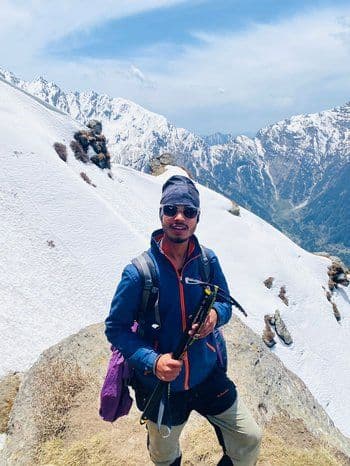
Mount Nun (7,135 m / 23,409 ft) is the highest peak in Ladakh and the principal summit of the Nun-Kun Massif in the Suru Valley, Kargil district. It is a technical high-altitude mountaineering expedition, not a trek, involving glacier travel and fixed-rope climbing above 5,000 m. TrekYaari runs it as a 20-day, Leh-to-Leh expedition suited to climbers with prior high-altitude and basic technical climbing experience, rather than first-time trekkers.
Quick Answer Mount Nun stands at 7,135 m (23,409 ft) in the Suru Valley, Ladakh. TrekYaari's Nun Peak Expedition is a 20-day Leh-to-Leh climb priced at ₹2,20,000 + 5% GST per person, running in July–August, and requires prior mountaineering experience. |
Mount Nun Expedition: Quick Facts
Detail | Information |
Peak Name | Mount Nun (also listed as Nun Peak) |
Elevation | 7,135 metres / 23,409 feet |
Location | Suru Valley, Kargil district, Ladakh |
Mountain Range / Massif | Nun-Kun Massif, Himalaya |
Expedition Type | High-altitude mountaineering expedition |
Difficulty | Moderate (TrekYaari's rating within the 7,000m-peak category) |
Duration | 20 Days, Leh to Leh |
Trek Distance | 88 km |
Best Season | July to August |
Base Camp Altitude | 4,511 m / 14,800 ft, near Tangol |
Starting Point | Leh |
Experience Required | Basic mountaineering course and prior high-altitude climbing recommended |
Price (Indian nationals) | ₹2,20,000 per person + 5% GST |
What Is Mount Nun?
Mount Nun is a 7,135 m peak in the western Himalaya, and the highest point in Ladakh outside the Karakoram. It is the primary summit of the Nun-Kun Massif, a compact cluster of snow and ice peaks rising above the Suru Valley in the Kargil district.
Mount Nun Height
Mount Nun's confirmed elevation is 7,135 metres (23,409 feet), placing it in the 7,000m-class of Himalayan peaks. This altitude band brings the physiological effects of extreme altitude into play: reduced oxygen availability, slower recovery, and a real risk of altitude illness if ascent isn't paced correctly. It's the main reason Mount Nun sits in the expedition category rather than the trekking category, and why the itinerary is built around multiple acclimatization rotations rather than a straight climb to the top.
Mount Nun Location
Mount Nun is located in the Suru Valley, in the Kargil district of Ladakh. The approach runs through Leh for acclimatization, then west by road to Kargil and further into the Suru Valley to the roadhead village of Tangol, from where the trek to Base Camp begins.
Note on the region: Ladakh became a separate Union Territory in 2019. Before that, this area was part of the state of Jammu & Kashmir, which is why some older sources still list Mount Nun under Jammu & Kashmir rather than Ladakh.
Mount Nun and the Nun-Kun Massif
Nun and Kun are two distinct summits of the same massif, connected by a broad snow plateau. Nun, at 7,135 m, is the higher of the two; Kun sits close behind at just over 7,000 m. The names are often confused in casual references because they're climbed from broadly the same valley system and are frequently mentioned together, but they are separate peaks with separate summit routes and separate expedition logistics.
Nun vs Kun: Quick Comparison
| Mount Nun | Mount Kun |
Elevation | 7,135 m / 23,409 ft | Just over 7,000 m |
Status | Higher of the two summits; highest point in Ladakh outside the Karakoram | Second summit of the same massif |
Route Character | Separate summit route and camp progression | Separate summit route and camp progression |
TrekYaari Offering | Nun Peak Expedition (this page) | Not covered on this page |
Is Mount Nun a Trek or an Expedition?
Mount Nun is a mountaineering expedition, not a trek. The distinction comes down to what the route actually demands: glacier travel, fixed-rope sections above Camp 1, use of crampons and an ice axe, and multiple camps set progressively higher on the mountain rather than a single trail to a viewpoint or pass. Trekking generally stays on established trails below the technical-climbing threshold; Mount Nun crosses that threshold from around Camp 1 upward. It also runs on expedition timelines, with rest, training, and load-ferry days built in for the body to adapt to extreme altitude, which is standard mountaineering practice and not something trekking itineraries need to account for.
Looking beyond Mount Nun? See TrekYaari's full range of Himalayan Expeditions for other 6,000m and 7,000m peaks across Ladakh, Himachal, and Nepal. |
Mount Nun Expedition Difficulty
Mount Nun asks more of a climber than a standard Himalayan trek, but less than a technically extreme 7,000m peak. The honest picture: it's approachable for a prepared, experienced climber, and genuinely hard for someone without prior mountaineering exposure.
Technical Climbing Requirements
● Comfort using crampons on snow and ice
● Basic ice axe technique for balance and self-arrest
● Movement on glaciated terrain, including crevasse awareness
● Ascending and descending fixed ropes with jumar and descender
● Familiarity with rope-team movement between camps
These are covered in a mountaineering fundamentals course; TrekYaari does not teach technical climbing from scratch on this expedition.
Physical and Altitude Challenges
● Sustained effort above 6,000 m on summit day
● Cold exposure, particularly overnight at Camp 3
● Long summit push, typically starting before dawn
● Cumulative fatigue from repeated load-carry and acclimatization rotations
● Weather that can change quickly and force a turnaround
Who Can Attempt Mount Nun?
Realistically, this expedition suits climbers who have completed a basic mountaineering course and have prior experience on a peak above roughly 5,500 m. Strong trekking fitness alone isn't enough once the route moves onto fixed ropes and glaciated terrain above Camp 1. Beginners with zero mountaineering background should build experience on a technical training peak first, rather than starting on a 7,000m expedition.
Mount Nun Expedition Route
The TrekYaari route approaches Mount Nun from Leh rather than directly from Kargil, using the extra days for acclimatization before the climb begins.
Approach to Mount Nun Base Camp
From Leh, the route drives 220 km to Kargil, then a further 75 km into the Suru Valley to Tangol. From Tangol, a 9 km trek leads to Nun Base Camp. This road-heavy approach is deliberate: it keeps climbers gaining altitude gradually rather than flying straight into thin air at height.
Camp-by-Camp Route Overview
Rather than a fixed day-by-day plan (which shifts with weather and route conditions), here's the altitude profile a climber actually moves through on Mount Nun. Each stage above Base Camp includes a load-ferry or acclimatization rotation before the group moves higher.
Stage | Altitude | Notes |
Leh | 3,505 m / 11,500 ft | Acclimatization base before the drive to Kargil |
Nun Base Camp | 4,511 m / 14,800 ft | Main staging area near Tangol; skills refresher day |
Camp 1 | 5,425 m / 17,800 ft | First camp on the mountain; load-ferry rotation |
Camp 2 | 6,035 m / 19,800 ft | Glacier travel begins in earnest; load-ferry rotation |
Camp 3 | 6,401 m / 21,000 ft | Summit camp; final gear checks and weather-window call |
Summit | 7,135 m / 23,409 ft | Pre-dawn push from Camp 3; same-day return to Camp 3 |
Camp altitudes follow TrekYaari's published route; exact fixed-rope placement, rotation days, and the total time taken between camps vary by season and are confirmed by the expedition team on the ground based on weather and group acclimatization.
Best Time for Mount Nun Expedition
TrekYaari runs the Nun Peak Expedition in July and August.
Recommended Climbing Season
July and August fall within the Himalayan summer window, when the Suru Valley approach is clear of heavy winter snow and temperatures on the mountain are more manageable for sustained climbing. This is also when weather patterns are relatively more predictable for planning a summit push, though conditions above 6,000 m can still shift quickly.
Why Weather Matters
Above Camp 2, weather decides the expedition more than fitness does. Wind, fresh snowfall, and poor visibility can close a summit window even when climbers are acclimatized and ready. The expedition team makes the final call on summit-day timing and, if conditions turn, on turning back before reaching the top. That call is a safety decision, not a failure of planning.
Mount Nun Expedition Cost
₹2,20,000 per person + 5% GST for Indian nationals, with a ₹1,00,000 advance (45% of the base price) due at booking. This is TrekYaari's current published price for the 20-day Nun Peak Expedition and is subject to change; confirm the live price before booking.
What Is Included
● 3 nights' stay in Leh with breakfast and dinner, twin-sharing, as per the itinerary
● Stay in hotel/homestay in Kargil, twin-sharing, as per the itinerary
What Is Not Included
● Medical certificate and trek insurance (mandatory, arranged by the climber)
● Meals during transit days
● Any personal expenses
What Affects Mount Nun Expedition Cost?
● Group size and whether it's a fixed departure or a private/custom batch
● Duration and number of acclimatization or buffer days used
● Logistics into the Suru Valley, including road conditions
● Permit and paperwork costs
● Level of technical and equipment support required
Mount Nun Expedition Permits and Documents
Required Permits
Ladakh requires an Inner Line Permit (ILP) for travel beyond certain points for both domestic and foreign nationals, and Mount Nun, as a scheduled Himalayan peak, requires a peak-climbing permit.
Documents Required
● Valid government-issued photo ID
● Inner Line Permit / relevant Ladakh travel permit
● Mandatory medical certificate confirming fitness for high-altitude climbing
● Trek/expedition insurance covering high-altitude rescue
Mount Nun Expedition Preparation
Physical Preparation
● Cardiovascular training: running, cycling, or swimming, built up over 2–3 months
● Stair climbing and hill repeats with a loaded pack
● Strength training for legs, core, and back
● Long-duration hikes to build endurance for consecutive climbing days
Technical Preparation
● A basic mountaineering course covering snow and ice climbing fundamentals
● Practice with crampons and an ice axe on real snow terrain, not just flat ground
● Familiarity with glacier travel and rope-team movement
● Comfort ascending and descending fixed ropes with a jumar and descender
Previous Experience Required
A completed basic mountaineering course plus prior experience on a peak above roughly 5,500 m gives climbers the best chance of a safe, successful attempt. Climbers without this background should build it up on a technical training peak before attempting Mount Nun.
Mount Nun Expedition Packing List
Technical Mountaineering Gear
● Mountaineering boots (double or high-altitude rated)
● Crampons fitted to your boots
● Ice axe
● Climbing harness
● Helmet
● Ascender (jumar) and descender/rappel device
● Locking and non-locking carabiners
Clothing and High-Altitude Gear
● Down suit or down jacket plus insulated trousers
● Base layers (thermal top and bottom)
● Insulated, high-altitude-rated gloves plus liner gloves
● Warm trekking and mountaineering socks
● UV-protective glacier goggles and sunglasses
● Warm headgear (balaclava, insulated cap)
Personal Essentials
● Headlamp with spare batteries
● Insulated water bottles
● Personal medication and a basic first-aid kit
● Documents: ID, permits, insurance
● High-SPF sunscreen and lip balm
● Basic toiletries and a power bank
Acclimatization and Altitude Safety
Why Acclimatization Matters
The body needs time to adapt to reduced oxygen as altitude increases. The itinerary builds this in deliberately: two rest days in Leh, and acclimatization plus load-ferry days at Base Camp, Camp 1, and Camp 2, so climbers gain altitude in controlled stages rather than pushing straight to the top.
Altitude Sickness
Climbers should be aware of Acute Mountain Sickness (AMS), High Altitude Pulmonary Edema (HAPE), and High Altitude Cerebral Edema (HACE). These range from mild headache and nausea (AMS) to serious, potentially fatal fluid buildup in the lungs or brain (HAPE/HACE). Any of these needs prompt evaluation by the expedition's medical support and a descent if symptoms don't improve. This is general awareness information, not a substitute for a medical assessment.
Emergency and Turnaround Protocols
● Ongoing monitoring of climbers during acclimatization and the summit push
● Weather-based decisions on summit timing, made by the expedition leader
● Descent as the default response to worsening symptoms
● Communication with Base Camp throughout the higher-camp rotations
How to Reach Mount Nun
Nearest Airport / Transport Hub
Leh (Kushok Bakula Rimpochee Airport) is the entry point for the expedition. It's well connected by regular flights from Delhi and other major Indian cities.
Road Journey and Starting Point
From Leh, the road route runs 220 km to Kargil, then a further 75 km into the Suru Valley to Tangol, the roadhead for the expedition.
Approach to Base Camp
From Tangol, a 9 km trek leads to Nun Base Camp. See the Route section above for the full camp-by-camp progression from there.
How TrekYaari Supports Your Mount Nun Expedition
Booking an expedition on a 7,000m peak is as much about who's managing the logistics and safety calls as it is about the mountain itself. Here's what that actually looks like on this trip.
TrekYaari has taken over 20,000 trekkers and climbers into the Himalaya across more than 5 years of operations, with a 4.8/5 rating from 800-plus trekkers and a catalogue of 70+ treks and 4+ expeditions. That track record is on standard Himalayan terrain, not Mount Nun specifically; the specifics below cover what that experience translates to on this expedition.
Experienced Expedition Team
TrekYaari runs operations directly in both India and Nepal, with in-house licensed guides and Sherpas rather than outsourced local contractors. On the ground, the team manages route progression, camp movement, and the summit-day call, so decisions are made by people who know the mountain and the group's condition, not by a remote office.
Acclimatization and Route Planning
The itinerary's rest, training, and load-ferry days aren't padding, they're the acclimatization structure that gives climbers a realistic shot at the summit without forcing the pace. The team adjusts rotations and timing based on how the group is actually acclimatizing and what the route conditions allow.
High-Altitude Safety and Support
Monitoring through the acclimatization rotations, weather-based decision-making on the summit push, and a default-to-descent approach when symptoms don't improve are built into how the expedition runs.
Expedition Logistics
Transport from Leh through Kargil to Tangol, accommodation in Leh and Kargil, Base Camp set-up, and the overall camp logistics on the mountain are handled as part of the package.
Technical and Equipment Support
The expedition is led by TrekYaari's own team on technical sections including fixed-rope movement between camps.
Conclusion: Should You Attempt Mount Nun?
Mount Nun rewards climbers who've put in the groundwork and punishes those who haven't. If you've completed a basic mountaineering course, have prior experience above roughly 5,500 m, and are comfortable on fixed ropes and glaciated terrain, this is a genuinely achievable 7,000m summit within a well-structured 20-day window. If you're coming from strong trekking fitness alone with no technical climbing background, the honest advice is to build that experience on a training peak first, rather than treating Mount Nun as a first expedition.
What tends to separate a safe, successful attempt from a turned-back one isn't raw fitness, it's pacing: respecting the acclimatization rotations, being honest about symptoms at altitude, and trusting the expedition team's call on weather and timing even when it means waiting or turning back. That's the structure TrekYaari's itinerary and on-ground team are built around.
The details still open for confirmation on this page, exact permit fees, the full inclusions list, and specific safety-equipment provisions, are exactly the kind of thing worth nailing down in a direct conversation before you commit dates. That's a better use of a phone call than guessing from a webpage.
Plan Your Mount Nun Expedition with TrekYaari If you have the mountaineering background for a 7,000m peak and want a team that runs its own operations on the ground rather than outsourcing them, the Nun Peak Expedition is worth a direct conversation about dates, batch size, and current pricing. Enquire directly at trekyaari.com, on WhatsApp at +91 93105 45460, or via the toll-free line 1800 889 1805. |


