Black Peak Expedition
Quick Answer Black Peak (Kalanag) is a technical high-altitude mountaineering objective in the Garhwal Himalaya, Uttarakhand, reaching 20,950 ft (approx. 6,387 m). TrekYaari's Black Peak Expedition runs 16 days from Dehradun to Dehradun, covering 85 km through the Har Ki Dun / Ruinsara Tal region to Kyarkoti Base Camp, with glacier travel and a steep summit push. It is rated Difficult and is best suited to climbers with prior high-altitude and basic mountaineering-course experience rather than first-time trekkers. |
Black Peak Expedition Overview
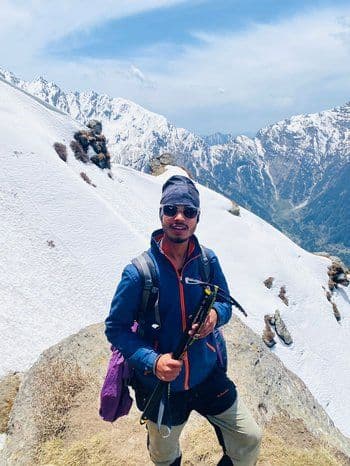
A Black Peak Expedition is built around three connected phases: a multi-day walk-in through Garhwal's Supin valley to reach the mountain, a period of acclimatization and camp-building on and above the glacier, and a summit push that depends on stable weather and a fit, acclimatized team. Climbers spend the early days gaining altitude gradually through forest and alpine terrain before the route steepens onto moraine, snowfields and glaciated ground closer to the peak.
The technical core of the climb sits in the final stage: crossing crevassed glacier terrain and a sustained snow/ice section to the summit ridge. This is the part of the expedition that separates Black Peak from a trekking peak — climbers need working competence with crampons, an ice axe and roped glacier travel, not just fitness for long walking days.
Because the summit day depends on snow condition, visibility and wind, the itinerary is built with buffer days. A well-run expedition treats the summit push as a decision made on the mountain, not a date fixed in a brochure.
Black Peak Height, Location and Geography
How high is Black Peak?
Black Peak (Kalanag) stands at 20,950 ft (approx. 6,387 m), making it one of the more accessible 6,000m-plus objectives in the Garhwal Himalaya for climbers with prior high-altitude experience.
Where is Black Peak located?
It sits in Uttarkashi district, Uttarakhand, in the Garhwal Himalaya, close to the Bandarpoonch massif and the Har Ki Dun valley system.
What is the nearest accessible town?
Sankri, reached by road from Dehradun, is the last major roadhead and staging point before the trek to the mountain begins.
What Makes Black Peak Different From Other Himalayan Expeditions
Climbers weighing Black Peak against other Indian Himalayan objectives usually land on the same question: does it sit closer to a trekking peak or a technical expedition? A few comparisons help place it.
Against popular trekking peaks in the same Garhwal region — routes that stay on foot-trail terrain throughout — Black Peak stands apart because the final stage genuinely requires roped glacier travel and crampon/ice-axe competence, not just altitude fitness. A trekking peak rewards endurance; Black Peak also demands technical judgment on the mountain.
Against fully technical big-wall or ridge objectives elsewhere in the Himalaya, Black Peak is considerably more approachable: the approach is a well-established trail through the Har Ki Dun / Ruinsara Tal region, the technical section is concentrated in a single stretch near the summit rather than spread across multiple pitches, and the logistics (permits, road access via Sankri) are more straightforward.
That middle position — genuinely technical, but not expedition-grade in the way a 7,000m+ peak is — is what makes Black Peak a common choice for climbers who've completed a Basic Mountaineering Course and want their first real glacier and summit-day experience before attempting something bigger.
How Difficult Is Black Peak?
Black Peak is a moderately technical Himalayan mountaineering objective — harder than a trekking peak, but more accessible than a fully technical big-wall or ridge climb. Climbers should expect roped glacier travel, a steep summit section, and genuine altitude exposure above 6,000 m.
Altitude
At 6,387 m, the expedition moves well into the altitude range where acclimatization failure is a real risk. Slow, staged ascent and rest days are non-negotiable.
Technical climbing
The final stretch to the summit ridge involves sustained snow and ice climbing steep enough to require fixed-rope technique and confident crampon movement, not just walking in crampons.
Glacier travel
Crevassed terrain between Base Camp and the higher camps requires roped travel, crevasse-rescue awareness, and a team that moves together competently on a glacier.
Weather and exposure
Wind and sudden weather changes near the summit ridge can close the summit window with little notice, and exposed sections leave limited room for error in poor visibility.
Endurance and mental demands
Long summit days starting well before dawn, sustained cold, and the uncertainty of weather-dependent timing all test endurance beyond pure fitness.
Who Should Attempt Black Peak?
Black Peak is not a suitable first Himalayan objective. It suits climbers who already have:
● A completed Basic Mountaineering Course (BMC), ideally an Advanced Mountaineering Course (AMC)
● Prior experience on a high-altitude trek above 4,500–5,000 m
● Working comfort with crampons and an ice axe on snow and ice
● Basic rope-team and glacier-travel awareness
● Strong cardiovascular fitness for sustained multi-hour summit days
Is Black Peak suitable for beginners?
No — Black Peak is not an appropriate first expedition for someone with no prior mountaineering training. It is realistic for climbers who have completed at least a basic mountaineering course and have some high-altitude trekking experience behind them.
Black Peak Expedition Cost
The Black Peak Expedition Cost with TrekYaari is ₹85,000 per person for the 16-day Dehradun-to-Dehradun package, priced for climbers booking from India. Booking requires an advance of ₹20,000 (roughly 24% of the total), with the balance payable ahead of departure.
Beyond the headline number, a few factors influence what an expedition like this ultimately costs an operator to run, and are worth understanding if you're comparing operators:
● Forest / wildlife sanctuary and mountaineering permits for the approach and peak
● Transport between Dehradun and Sankri (185 km each way)
● Porter and mule support for load-ferrying to Base Camp and higher camps
● Technical staff: climbing guides/Sherpas for the glacier and summit section
● Base camp and high-camp infrastructure — tents, kitchen, communication equipment
● Group size and batch type (fixed departure vs. private/custom)
● Emergency and evacuation contingency arrangements
Ops team to confirm: whether ₹85,000 is the current fixed-departure price only, or also applies to private/custom batches — and whether pricing differs for non-India climbers.
What Does the Black Peak Expedition Cost Include?
Included (indicative — confirm against current package terms)
● Accommodation through the approach trek and at Base Camp
● Meals from arrival at Sankri through the expedition
● Technical climbing support (guides/Sherpas) for the glacier and summit section
● Group climbing equipment (ropes, anchors, and similar shared gear)
● Permits and local forest/wildlife sanctuary fees
● Porter/mule support for group equipment
Not Included (indicative)
● Personal climbing gear (harness, crampons, ice axe, boots, unless rented separately)
● Personal expenses, tips, and any items outside the group inclusions
● Travel insurance and emergency evacuation costs beyond what's specified
● Transport to/from Dehradun unless specified in the package
Ops team to confirm: this section must be rewritten against TrekYaari's actual current inclusions/exclusions list before publishing — the items above are placeholders based on standard expedition structure, not confirmed package terms.
Best Time for Black Peak Expedition
TrekYaari runs the Black Peak Expedition across two windows: April to June, and September to November. The best time to climb Black Peak depends on which trade-off a climber prefers between stable weather and snow condition — both windows sit outside the monsoon months, when the route becomes unsafe and is not operated.
April–June (pre-monsoon)
Longer daylight hours and generally settled weather in the earlier part of the window, though snow bridges on the glacier can be less predictable as temperatures rise toward June.
September–November (post-monsoon)
Clearer skies after the monsoon retreats, with cold but often stable conditions — a window that also extends later into autumn than most comparable Garhwal peaks.
Black Peak Expedition Acclimatization
The itinerary is built around gradual altitude gain: multiple nights are spent at intermediate elevations (Seema, Ruinsara Tal, Kyarkoti Base Camp) before any glacier travel begins, allowing the body time to adjust. Two dedicated rest-and-acclimatization days — at Base Camp and again at Advanced Base Camp — sit ahead of the highest camps rather than immediately before the summit push.
Guides monitor climbers for symptoms of altitude illness throughout — headache, loss of appetite, disturbed sleep and unusual fatigue are treated as signals to slow down or, if needed, descend. Hydration and steady caloric intake are maintained deliberately at altitude, where appetite often drops. Anyone showing worsening symptoms is expected to descend rather than push on, regardless of schedule.
Permits Required for Black Peak
Because the approach passes through the Govind Pashu Vihar National Park and Wildlife Sanctuary buffer and the peak itself falls into the Indian Mountaineering Foundation's regulated peak list, expeditions typically require:
● A mountaineering permit (through the Indian Mountaineering Foundation or the relevant state authority)
● Forest/wildlife sanctuary entry permission for the approach route
● Local registration at Sankri/Taluka checkpoints
Black Peak Expedition Packing List
This is TrekYaari's confirmed personal packing list for the Black Peak Expedition — make sure you have everything on it before departure.
● Backpack (65L to 75L)
● Warm clothes (5–6 layers)
● 5–6 pairs of socks
● One pair of gloves
● 1 warm jacket
● 1 pair warm cap
● Hiking shoes
● Raincoat or poncho
● Toilet papers
● Water bottle (thermal, for the snow trek)
● Snacks like dry fruits, energy bars, candies, etc.
● Power bank or charger
● Sunscreen, lip guard, or moisturizer
● Torch
● One valid ID proof
● Tiffin box
Food and Accommodation During the Expedition
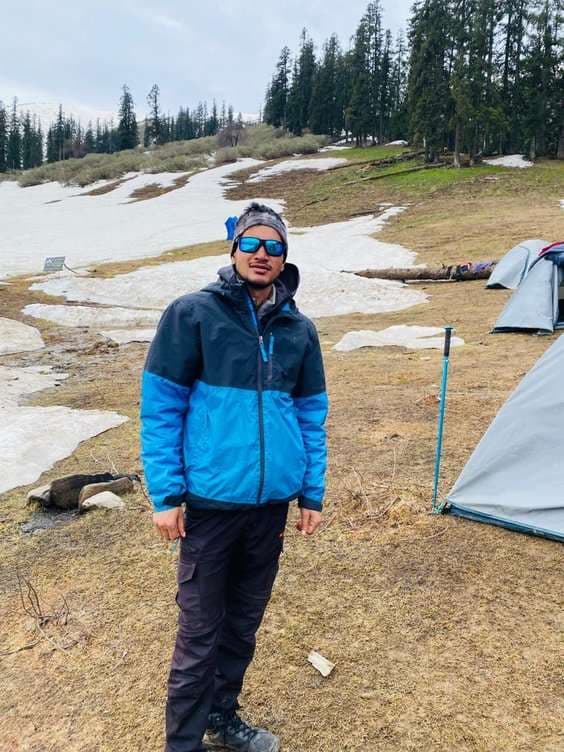
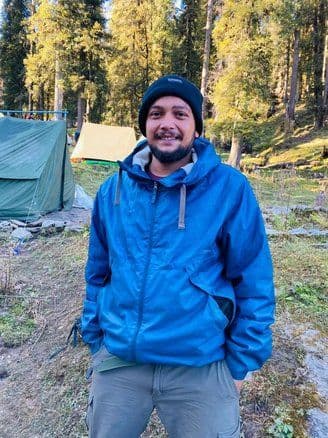
Accommodation moves from guesthouses at Sankri to tented camps from Ruinsara Tal onward, with dedicated expedition tents at Base Camp and lighter camps at higher elevations. Meals are prepared by an expedition kitchen team, shifting from fuller hot meals lower down to simpler, calorie-dense food closer to the summit push. Hot drinks and boiled/treated water are provided throughout to support hydration at altitude.
Black Peak Weather and Climbing Conditions
Temperatures swing sharply between daytime sun exposure on snow and pre-dawn summit-day cold, and wind speed on the upper mountain can change quickly enough to close the route with little warning. Because of this, no expedition — including this one — can guarantee a summit attempt or summit success. The itinerary's buffer days exist to give the team the best realistic chance within safe limits, not to promise a fixed outcome.
Safety During the Black Peak Expedition
● Daily acclimatization and symptom monitoring by expedition staff
● Weather and route condition checks before committing to each stage
● Technical equipment checks before glacier travel and the summit push
● Clear turnaround-time protocol on summit day
● Base camp medical kit and an evacuation plan for serious altitude or injury cases
No expedition can promise a guaranteed summit or a zero-risk climb — the safety structure above is designed to manage risk responsibly, not eliminate it.
How to Reach Black Peak
The nearest major access point is Dehradun (by air or rail), from where a 185 km road journey leads to Sankri. From Sankri, the mountain is reached entirely on foot through Taluka, Seema and Ruinsara Tal to Kyarkoti Base Camp.
How to Prepare for Black Peak Expedition
Physical Preparation
● Aerobic base-building: running, cycling or stair climbing several times a week
● Loaded backpack walks to build carrying endurance
● Leg and core strength training for sustained uphill days
Technical Preparation
● Crampon movement and ice-axe technique, ideally on real snow/ice before the expedition
● Basic glacier travel and rope-team awareness
● A completed Basic Mountaineering Course is strongly recommended before attempting this peak
Mental Preparation
● Comfort with cold, fatigue and long uncertain summit days
● Willingness to accept a guide's call to turn back if conditions demand it
Why Choose TrekYaari for Black Peak Expedition?
TrekYaari runs its own ground operations in India and Nepal rather than outsourcing to local subcontractors, with in-house licensed Sherpas and guides leading technical sections directly.
Black Peak Expedition Booking Process
● 1. Enquire — share your mountaineering and high-altitude trekking background
● 2. Experience assessment — the team reviews whether Black Peak is a realistic fit for you
● 3. Date confirmation for a fixed departure or private batch
● 4. Registration and permit paperwork
● 5. Preparation — training guidance and gear checklist
● 6. Pre-expedition briefing
● 7. Expedition departure from Dehradun/Sankri
If you have prior high-altitude or basic mountaineering course experience and want to check whether Black Peak fits your background, reach out to plan your dates
Conclusion
Black Peak (Kalanag) rewards climbers who come prepared: it's accessible enough to be a realistic first 6,000m-plus objective for someone with basic mountaineering training, yet technical enough that fitness alone isn't sufficient. The route through the Har Ki Dun / Ruinsara Tal region offers a genuine high-altitude approach, and the glacier travel and summit push test the skills built during training — not just endurance.
If your mountaineering background and high-altitude experience line up with what's outlined above, the next step is straightforward — get in touch, and TrekYaari's team will assess your readiness and help you plan dates around a season window that suits you.


